
4 November 2026
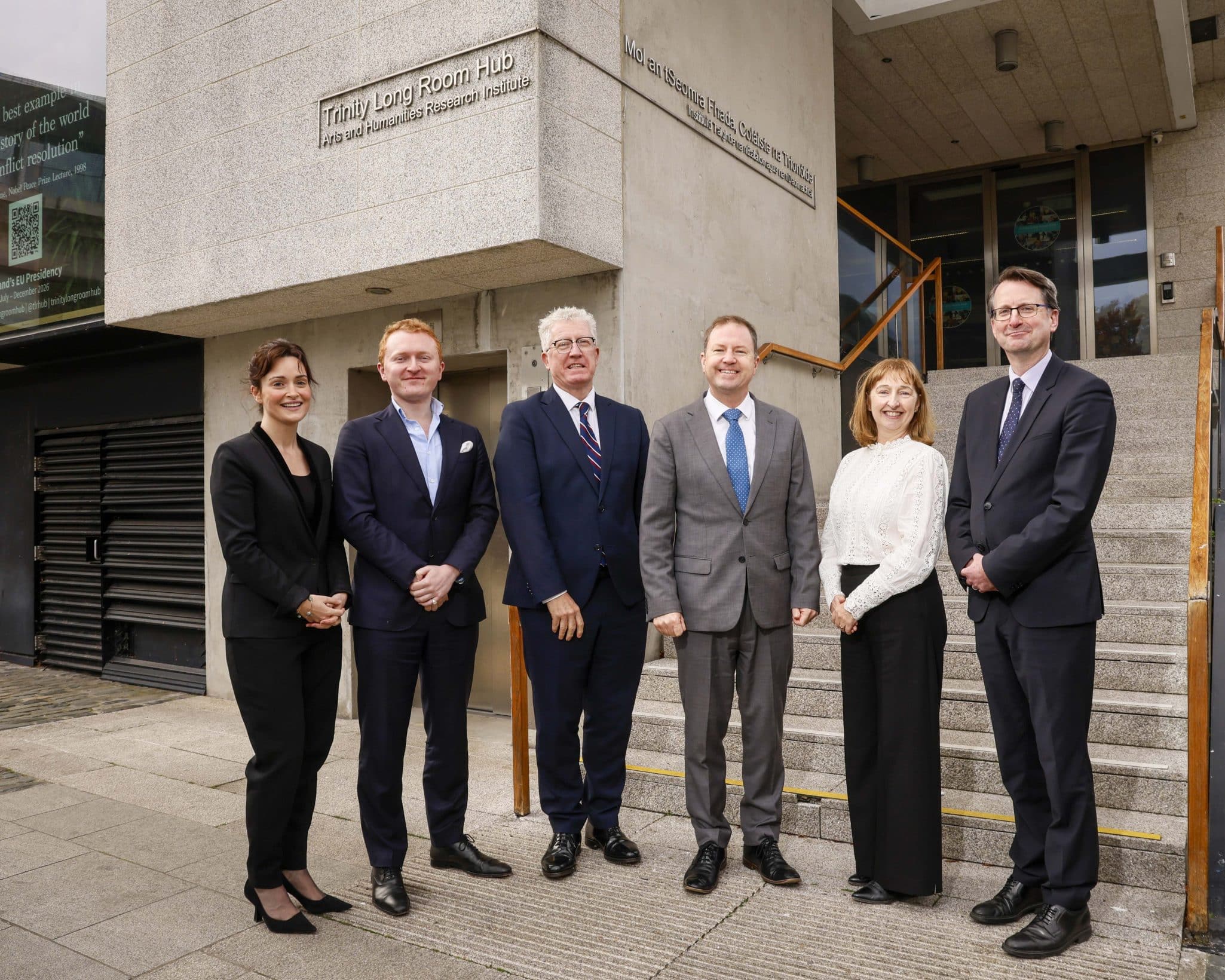
The future of UK-Ireland-EU collaboration in higher education, research and innovation was the focus of a high-level seminar, titled ‘Knowledge Without Borders: Rebuilding UK-EU Academic & Research Partnerships’ hosted by the British Irish Chamber of Commerce at Trinity College Dublin on Wednesday, 4 November.
The seminar opened with welcome remarks from Professor Patrick Geoghegan, Director of the Trinity Long Room Hub at Trinity College Dublin, and Professor Dáire Keogh, President of the British Irish Chamber of Commerce and President of Dublin City University.
The event brought together senior representatives from universities, research institutions, government and industry to explore how stronger cross-border partnerships can support research excellence, innovation and economic competitiveness.
Held at the Long Room Hub at Trinity College Dublin as part of Ireland’s EU Council Presidency programme, the event featured keynote addresses from Minister for Further and Higher Education, Research, Innovation and Science James Lawless TD and British Ambassador to Ireland Kara Owen.
Discussions across two panel sessions examined the opportunities for rebuilding research relationships between the UK, Ireland and the European Union, as well as the practical steps needed to translate academic collaboration into wider economic and societal impact.
Securing the future of UK-EU research collaboration
The first panel explored the future of the UK-EU research relationship, with particular attention given to the next EU Framework Programme for Research and Innovation, FP10, which will run from 2028 to 2034.
Speakers in the panel included Brendan Jennings, Chief Officer Research, Innovation & Engagement at Atlantic Technological University; Professor Andrew Jones, Vice-Chancellor of Brunel University London; Professor Archie Clements of Queen’s University Belfast; Professor Sinéad Ryan, Vice-President for Research at Trinity College Dublin; and Professor Emma Flynn, Provost of the University of Surrey. The discussion was moderated by Triona McCormack, Vice-President for Strategy and External Engagement at University College Dublin.
A recurring theme was the importance of providing greater certainty for universities and research institutions. The UK’s participation in Horizon Europe has demonstrated the value of international research partnerships, but panellists highlighted the need for predictable funding and clearer long-term frameworks to support continued collaboration.
Research security also featured prominently in the discussion. As international research partnerships become increasingly important in strategically significant areas, including security, defence and emerging technologies, institutions need appropriate governance frameworks.
The discussion highlighted opportunities for the UK and Ireland to build on existing research security frameworks, develop trusted partnerships and reduce unnecessary administrative barriers. Establishing trusted partner relationships was identified as an important consideration in ensuring that UK institutions can participate meaningfully across the European research ecosystem.
Other priorities included strengthening university alliances, improving researcher mobility and ensuring that UK-Ireland partnerships are embedded throughout the European research and innovation ecosystem.
From research partnerships to innovation and economic impact
The second panel shifted the focus towards translating research partnerships into practical innovation, examining how universities, businesses and research institutions can work together to generate economic value.
Panelists included Professor Veronica Campbell, President of South East Technological University; Paul Johnston, Director General of the Irish Universities Association; Professor David Burn, President of the University of Galway; Professor Elena Gaura, Deputy Pro Vice-Chancellor Research at Coventry University; and Dr Raquel Harper, Executive Director of the Trinity Co-Centre for Climate + Biodiversity + Water. The panel was moderated by Jamie Arrowsmith of Universities UK.
Universities were recognised as increasingly important drivers of economic growth, with technological universities playing a particularly significant role in connecting research and innovation with regional development.
The discussion highlighted the potential to strengthen collaboration between UK and Irish institutions through shared research infrastructure, bilateral funding mechanisms and closer engagement with industry. In particular, a bilateral cooperation fund was suggested as a possible way to help develop early-stage projects and prototypes before businesses seek venture capital investment.
Supporting small and medium-sized enterprises (SMEs) to participate in international research networks was another important consideration. Panellists highlighted the opportunities for SMEs to engage with European university alliances and broader research ecosystems, helping businesses access expertise, develop new technologies and build international partnerships.
There was also significant discussion around the opportunities presented by the UK’s return to the Erasmus+ programme from January 2027. Strengthening student and staff mobility was identified as an important way to build lasting institutional relationships and support the movement of talent between the UK, Ireland and Europe.
The Common Travel Area was highlighted as a particular advantage in the UK-Ireland relationship, providing an established foundation for a shared labour market and greater mobility of talent.
Shared challenges require cross-border solutions
Environmental sustainability and energy security also emerged as important areas for future UK-Ireland research cooperation.
Recognising that environmental challenges do not stop at national borders, panellists highlighted the potential for institutions to combine expertise, research capabilities and datasets to address shared challenges.
Offshore renewable energy was also identified as an area offering significant opportunities for closer UK-Ireland cooperation, with potential benefits for economic development and energy security.
Panellists acknowledged that financial constraints, funding uncertainty and complex regulatory and administrative arrangements continue to present challenges. Greater predictability in funding, clearer partnership frameworks and continued engagement between governments, universities and industry were identified as important steps towards creating a more sustainable environment for collaboration.
Building a stronger research and innovation ecosystem
Across both discussions, a consistent message emerged: the foundations for stronger UK-Ireland-EU research partnerships already exist, but greater certainty, more accessible funding and continued institutional engagement are needed to realise their full potential.
The discussions highlighted several priorities for future cooperation, including:
- Long-term research funding: Providing greater certainty around FP10 and future UK participation in European research programmes.
- Trusted research partnerships: Strengthening research security frameworks and enabling trusted collaboration between UK, Irish and European institutions.
- Bilateral cooperation: Exploring joint funding mechanisms and shared research infrastructure to support early-stage innovation.
- Business and SME engagement: Creating stronger pathways for businesses to participate in research partnerships and access academic expertise.
- Talent mobility: Maximising opportunities through Erasmus+ and the Common Travel Area to strengthen student, staff and researcher mobility.
- Strategic collaboration: Building partnerships in areas of shared economic and societal importance, including artificial intelligence, cybersecurity, offshore renewable energy and environmental research.
The seminar reinforced the importance of maintaining strong academic and research relationships across the UK, Ireland and the European Union. As Europe considers its future research and competitiveness priorities, deeper cross-border cooperation will be essential to supporting innovation, developing talent and strengthening economic resilience.
The British Irish Chamber of Commerce thanks Trinity College Dublin, the keynote speakers, panellists and attendees for contributing to an important discussion on the future of UK-Ireland-EU academic and research partnerships.


